
Why Authenticity Matters for Small Businesses in the Age of AI


A potential customer arrives on your website. They can see the services you provide and the areas you cover. Everything looks professional. But can they tell who runs the business, who will do the work, or what experience sits behind the promises?
These are reasonable questions, particularly when someone is choosing a business they have never used before.
AI tools have made it easier to write website pages and publish articles quickly. They can be useful for organising ideas or helping an owner get past a blank page. However, polished wording alone gives visitors little evidence of the business behind it.
For small businesses, authenticity means making that evidence visible. Your people, knowledge and completed work can help a customer understand why they should trust you.
Resist the temptation to publish for the sake of it
When an AI tool can produce an article in seconds, publishing several posts a week might seem like an obvious way to improve your website. The question is whether those articles contain anything useful that reflects your own experience.
A plumber who explains a recurring problem they encounter in older local properties gives readers something specific. A generic article about why plumbing maintenance matters may tell them very little they have not read elsewhere.
At UK Business Portal, I commit to one blog post a month. That gives a manageable rhythm and keeps my attention on choosing subjects that are useful to small business owners. It also fits the approach to the platform: taking time to review businesses and create profiles that represent them properly.
The same principle applies to your website. Choose a publishing schedule you can maintain, check what you publish and contribute knowledge drawn from your work. AI can assist with the writing, but you should take responsibility for every claim.
Give your About page something worth reading
An About page is often where visitors look when they want to know who they are dealing with. Yet many businesses fill it with phrases such as “committed to excellence” or “delivering exceptional service”. Those statements could describe almost anyone.
Explain who started the business, what led them into the industry and how the business has developed. Include where you are based and the type of work you specialise in. If you mention years of experience, make it clear whether that refers to the business itself or the owner’s background.
You do not need a dramatic founding story. A straightforward account of your experience and approach is enough to give visitors a clearer picture. For a sole trader, writing about yourself is entirely appropriate. Customers should be able to understand the scale and nature of the business they are contacting.
Introduce the people customers will meet
Names and faces help visitors connect a website with actual people. A team page can explain who handles enquiries, who carries out the work and what relevant experience each person brings.
Keep biographies useful. A customer’s main interest is likely to be someone’s role, specialism and qualifications, rather than a long list of hobbies.
If you work alone, a photograph and a short introduction on your About page may be all you need. There is no requirement to create a separate team page or make the business appear larger than it is. Check these details periodically. Former employees and outdated roles can cause confusion, particularly when a customer asks for someone who has left.
People buy from people
Take a look at the two homepages below. I’ve chosen one of our members, Jack The Plumber, and put his website alongside a fictional plumbing website I created using AI, called Joe Bloggs.
Both clearly present a plumbing service, but ask yourself: which gives you a better sense of who you would be inviting into your home?
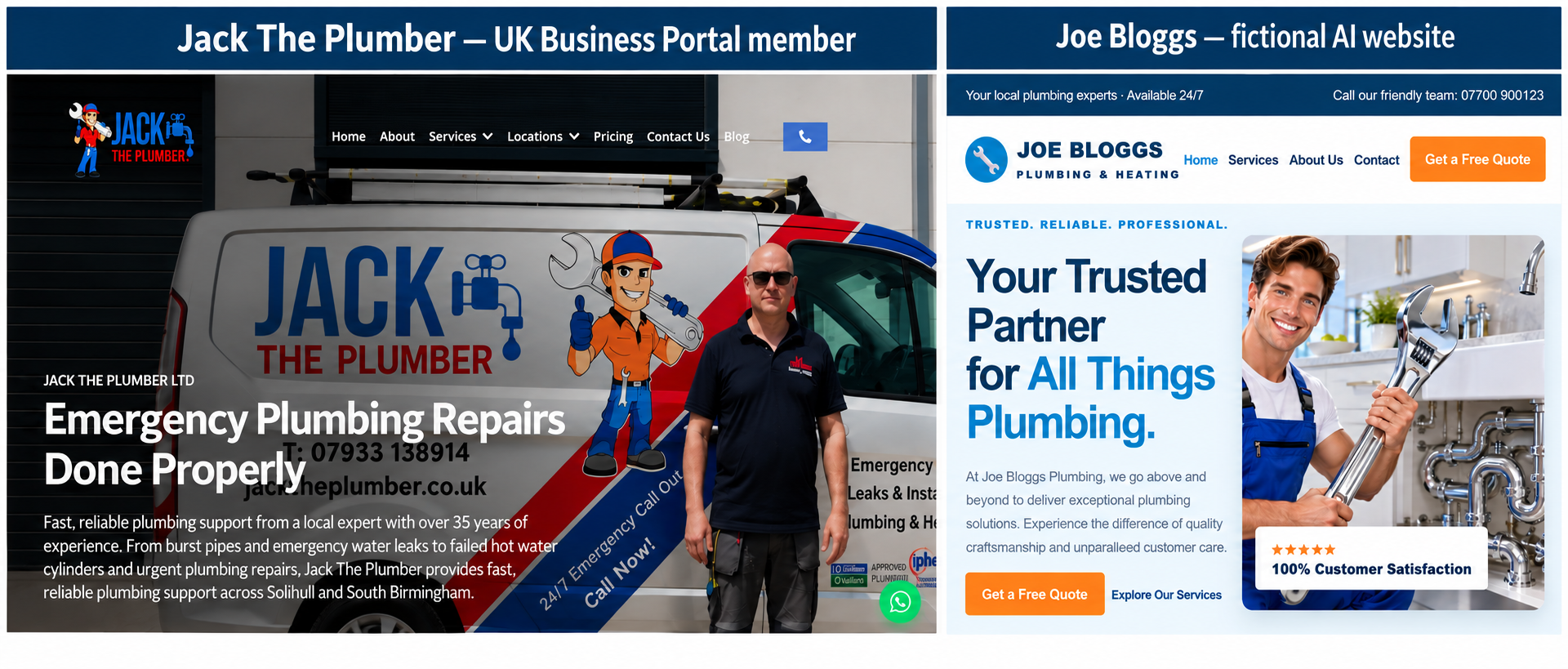
On Jack’s homepage, you can see Jack himself beside his branded van, wearing his work polo shirt. His branding connects the person, vehicle and website. The wording also explains the problems he handles and where he works, giving visitors practical information alongside a personal introduction.
The Joe Bloggs website looks polished at first glance. But the smiling man holding a spanner is AI-generated, and phrases such as “Your Trusted Partner” and “unparalleled customer care” tell you little about who is behind the business. I’ve included a “100% Customer Satisfaction” claim too, without any evidence to support it—a reminder that anyone can put an impressive statement on a website.
For me, this is where “people buy from people” becomes tangible. Jack is showing prospective customers who they would be contacting. That matters when you’re choosing someone to work in your home.
You can do the same with photographs of yourself, your premises or completed projects. They don’t need to be professionally staged. Clear photographs with useful captions can tell visitors something real about your business.
Show how you have helped a customer
Case studies turn broad claims into examples visitors can understand. They are especially valuable when a service is difficult to explain through a short description.
A useful case study covers the customer’s situation, what you did and the result. A roofing company could explain how it identified the source of a leak and repaired the affected section. An accountant could describe how it helped a business organise its records ahead of a deadline.
Include details that demonstrate your judgement. Why did you recommend that approach? What complication did you need to resolve?
Avoid inventing figures or overstating outcomes. Where confidentiality matters, describe the work without identifying the customer, provided you have permission to share the relevant details.
Let your own perspective come through
A short quote from the owner can help explain how the business operates. It should say something meaningful about your standards or the way you work.
You might explain how you keep customers informed during a project, why you recommend repairing something before replacing it, or how you help someone understand their options.
Use words you would comfortably say in conversation. A tagline can reinforce your purpose, but the surrounding content should show how you put that purpose into practice.
Display relevant qualifications, professional memberships and accreditations too. Explain what they relate to and link to a verification page where one is available. Keep logos and membership details current.
How this connects with Google Search
Google’s guidance encourages helpful, reliable content, including evidence of expertise and clear background information about the author or business. Its guidance on AI content focuses on accuracy, quality and relevance.
That supports a sensible approach: publish information you can stand behind and make it clear who is responsible for it. An About page or team photograph is not a guarantee of higher rankings, but these details can help visitors assess your business and understand its experience.
Start by reviewing your website as someone who has never heard of you. Can they identify the people involved, see examples of your work and check your credentials? If those details are missing, you already have useful material to add: the business you run every day.


