
Why Quality Location Pages Matter for Small Businesses

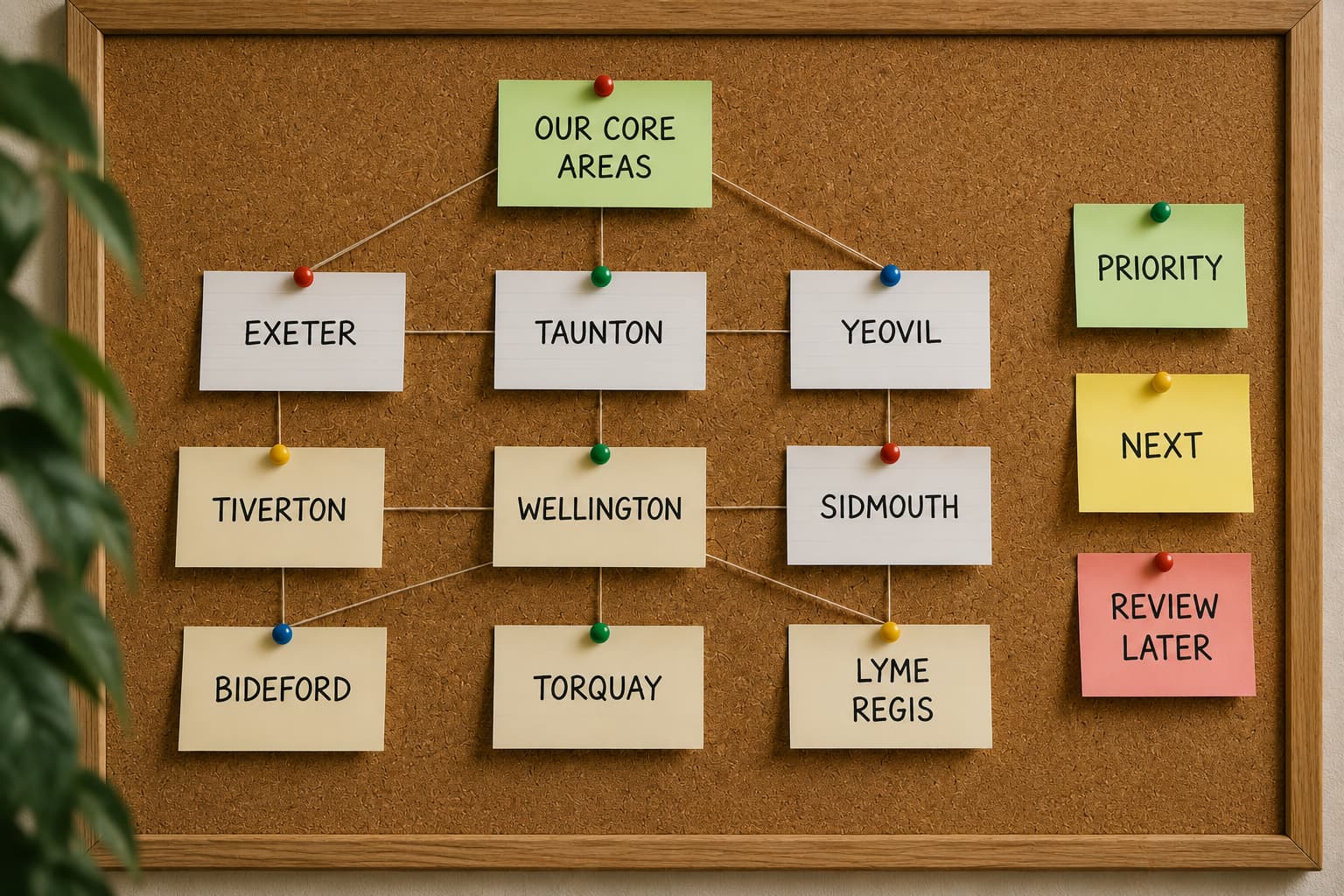
If your plan is to create hundreds of location pages and sit back waiting for enquiries to roll in, you may be disappointed.
It’s an easy trap to fall into. Many small business owners assume that if one location page is good, then fifty must be even better. After all, targeting every nearby town or city sounds like a sensible way to reach more customers.
In reality, the opposite is often true.
Search engines have become increasingly effective at recognising low-quality, repetitive content. Publishing dozens of near-identical pages that simply swap one place name for another rarely provides any real value to visitors and can dilute the overall quality of your website. Instead of helping your visibility, it may simply create more pages that struggle to rank.
When created with care, however, dedicated location pages remain one of the most effective ways for businesses covering multiple areas to improve their online visibility. The difference lies not in how many pages you publish, but in how useful each one is.
What are location pages?
Location pages, sometimes referred to as GEO pages, are individual pages on your website dedicated to a specific town, city or service area.
For example, a commercial cleaning company operating across the West Midlands may have dedicated pages for Birmingham, Solihull and Wolverhampton. Each page gives potential customers information directly relevant to that location while helping search engines understand where the business provides its services.
The important point is that every page should exist for a reason. If a visitor lands on that page, they should leave knowing something they couldn’t have learnt from another page on your website.
Where many small businesses go wrong
The biggest mistake isn’t creating location pages. It’s creating too many of them without enough substance.
Some businesses publish hundreds of pages using almost identical wording, changing little more than the town or city name. While this may once have produced results, today’s search landscape has evolved considerably.
As artificial intelligence has made it easier than ever to generate large volumes of content, originality has become increasingly important. Search engines are placing greater emphasis on content that demonstrates genuine expertise and provides meaningful value to users, rather than simply targeting keywords.
Imagine two businesses competing in the same industry. One has created 150 thin location pages with very similar content. The other has invested time producing 15 genuinely informative pages that demonstrate local knowledge, showcase previous work and answer questions specific to each area. In many cases, the smaller collection of stronger pages is likely to provide a far better experience for both visitors and search engines.
What makes a good location page?
A successful location page should feel like it was written specifically for people in that area, not copied from another page and edited in a few places.
Where appropriate, refer to projects you’ve completed locally, highlight testimonials from customers in the area, mention nearby towns you also cover or answer questions that regularly arise from local enquiries. Demonstrating an understanding of the area itself can also help build credibility and reassure potential customers that you’re genuinely active there.
The objective shouldn’t be to fill another gap on your sitemap. It should be to create a page that genuinely deserves to rank because it provides useful information.
Before publishing a new location page, ask yourself one simple question: if you removed the location name from the page, would the content still read exactly the same? If the answer is yes, it probably isn’t specific enough. A strong location page should genuinely reflect the area it represents rather than simply replacing one town or city name throughout the text.
Start with your most important locations
There’s rarely any need to launch dozens of location pages at once.
A more effective approach is to identify the locations that matter most to your business. These are often the areas where you already have an established customer base, regularly carry out work or see the greatest commercial opportunity.
Once those pages are established, attracting visitors and delivering enquiries, you can gradually expand into neighbouring locations. This allows you to maintain quality while growing your website in a logical and sustainable way.

Review your existing location pages regularly
Creating location pages shouldn’t be viewed as a one-off project. As your website evolves, it’s worth reviewing older pages to ensure they’re still contributing positively to your online presence.
If a location page has generated little or no traffic over a sustained period, attracts no enquiries and offers very little unique information, it may be time to improve it, merge it with another page or, in some cases, remove it altogether. A smaller collection of stronger, genuinely useful pages is often far more valuable than maintaining dozens of weak pages simply because they already exist.
Where pages are removed, redirect visitors to the most relevant alternative, whether that’s another location page or a related service page. This helps preserve a positive user experience while ensuring visitors don’t encounter broken or outdated content.
Give your location pages the visibility they deserve
Even the strongest location pages won’t perform well if they’re difficult to find.
Include them within a logical section of your website, such as an ‘Areas We Cover’ page, and ensure they are linked naturally from relevant service pages and other nearby locations where appropriate. Strong internal linking helps visitors navigate your website while helping search engines understand how your content is organised.
Rather than treating location pages as isolated pieces of content, they should form part of the overall structure of your website.
Think long term
Many businesses focus on how many location pages they can publish. A better question is whether each page genuinely earns its place on the website.
As search continues to evolve, businesses that invest in fewer, higher-quality pages are likely to be in a much stronger position than those relying on large volumes of repetitive content. Every location page should strengthen your website, reinforce your expertise and provide value to potential customers.
Creating location pages isn’t about ticking boxes or targeting every postcode on a map. It’s about demonstrating that you understand the areas you serve and giving customers confidence that they’re dealing with a business that genuinely operates there.
Summary
Dedicated location pages can play an important role in helping small businesses reach more local customers, but only when they are created with purpose. Rather than producing large numbers of thin, repetitive pages, focus on building a smaller collection of well-written, informative pages that demonstrate genuine local knowledge and provide real value. In today’s search landscape, quality consistently outperforms quantity, making thoughtful location pages a far more effective long-term strategy than simply trying to target every town and city.